In Southern New Hampshire and Northern Massachusetts— from Nashua’s quiet streets to Salem’s historic districts—winter arrives with a mix of crisp air, drifting snow, and freeze-thaw drama. For homeowners in Manchester, Concord, Bedford, Merrimack, Londonderry, Hudson, and Derry, an aging roof can become a stage for ice dams, leaks, and mounting anxiety. Amid these challenges, EPDM roofing emerges as a top choice: a resilient, rubber roofing solution designed to weather New England’s most severe winters.
Problem: Harsh Winters Meet Aging Roofs
When snow piles high, when ice forms inside gutters, when temperatures plunge and then climb in cycles, conventional roofing systems show their vulnerabilities. Shingles crack. Seams separate. Water finds its way into attics and walls. In a region where codes demand both safety and energy efficiency, every freeze-thaw cycle becomes a test of materials and installation quality.
Impact: From Ice Dams to Structural Strain
Ice dams create ridges of packed snow at roof edges, blocking meltwater and forcing it under shingles. The result: interior water stains, rotted sheathing, and the need for costly repairs. Homeowners face:
• Unexpected repair bills
• Disruption of daily life
• Compromised home value
• Anxiety about the next major storm
This impact is felt in every township—whether you’re watching flurries in Merrimack or bracing for sleet in Londonderry.
Mechanism: How EPDM Roofing Stands Up
At its core, EPDM roofing membrane is a synthetic rubber sheet, vulcanized for strength and flexibility. Here’s how it works:
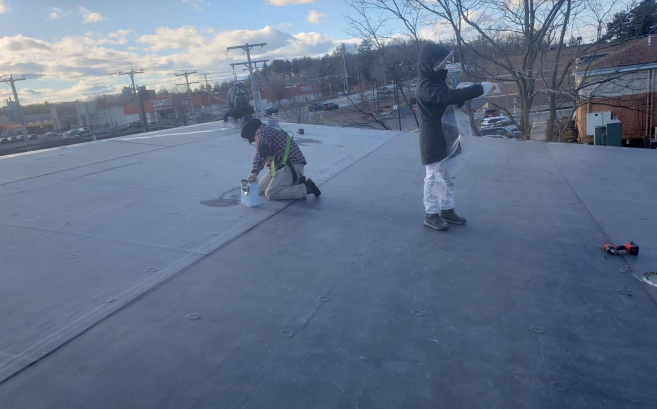
When snow falls. When ice forms. When temperatures swing—EPDM remains pliable. Its seams, sealed with heat welding or advanced adhesives, become a continuous barrier. Unlike granular shingles or rigid panels, the membrane conforms to the roof deck, eliminating gaps where moisture can penetrate.
A professional installation in Bedford or Hudson ensures a single-ply roofing system that clings to the substrate, channeling meltwater into designed drainage paths. The result is predictable performance, even under heavy snow load and repeat freeze-thaw cycles.
Benefits: Durability, Efficiency, Peace of Mind
Transformation is subtle but profound. What once felt like a temporary patchwork becomes a durable shield:
• Longevity: 25–30 years of consistent performance.
• Low maintenance: Routine inspections and clear debris—simple tasks compared to shingle replacement.
• Energy savings: White or cool EPDM membranes reflect winter sun and improve attic insulation.
• Cost-effectiveness: Lower life-cycle costs versus frequent repairs or re-roofing.
This combination of traits offers homeowners in Derry and Concord a sense of security: their roof is not just a cover, but a long-term investment.
Outcome: A Roof Built for New England Extremes
Choosing EPDM means choosing predictability. When a blizzard hits Nashua, when an ice storm chills Salem, your roof remains resolute. Fewer leaks. Fewer surprises. Greater confidence.
From the first snowfall to spring thaw, EPDM roofing stands as a testament to modern materials engineered for real-world conditions. It’s a shield against the elements, a promise of durability, and a reflection of expert craftsmanship.
Frequently Asked Questions
What is EPDM roofing?
EPDM (ethylene propylene diene monomer) roofing is a durable, synthetic rubber membrane widely used in low-slope and flat roof applications. It offers excellent freeze-thaw durability and resists UV radiation, ozone, and weathering.
How does EPDM handle freeze-thaw cycles?
The membrane’s elasticity allows it to expand and contract without cracking. Seam integrity is maintained through heat welding or specialized adhesives, preventing water intrusion during temperature swings.
Is EPDM suitable for New England climates?
Absolutely. Its resistance to heavy snow load, ice dams, and thermal stress makes EPDM an ideal choice for regions like Southern NH and Northern MA, where winters can be unpredictable.
What maintenance does EPDM require?
Regular visual inspections—especially after major storms—are key. Clear debris, check seams, and ensure drains are unobstructed. Proper maintenance can extend the membrane’s lifespan beyond three decades.
How long can EPDM roofing last?
With professional installation and routine care, EPDM roofs often last 25–30 years, making them a cost-effective solution compared to traditional roofing materials.
For homeowners in New Hampshire or Massachusetts looking to maintain a safe and reliable home exterior, the team at Revive Roofing & Siding remains available for guidance, inspections, and detailed evaluations.
Website: reviveroofingandsidingllc.com
Email: reviveroofingandsidingnh@gmail.com
Phone: +1 (603) 560-5309