Can You Use a Siding Nailer for Roofing? The Mistake That Ruins Roofs Early
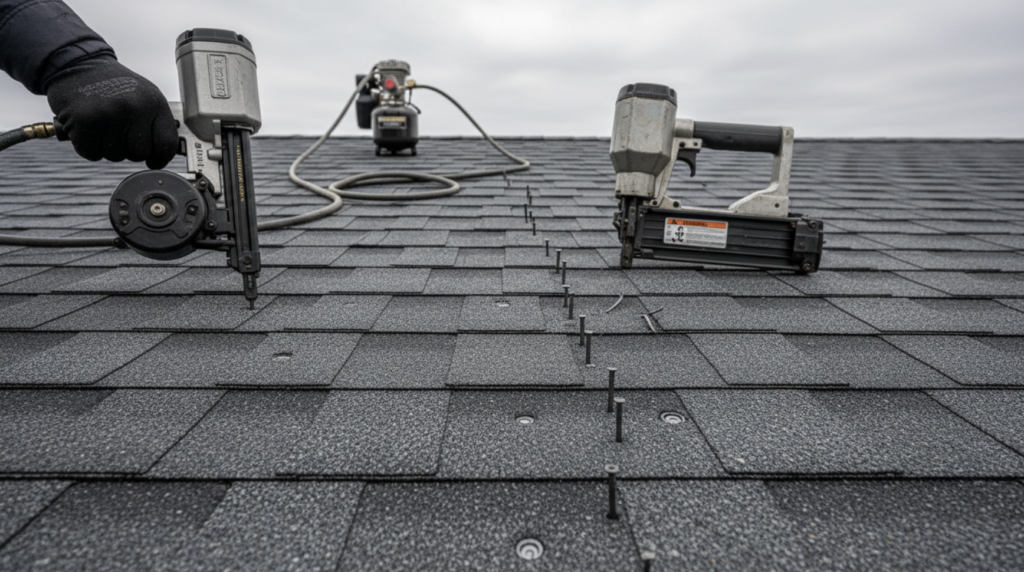
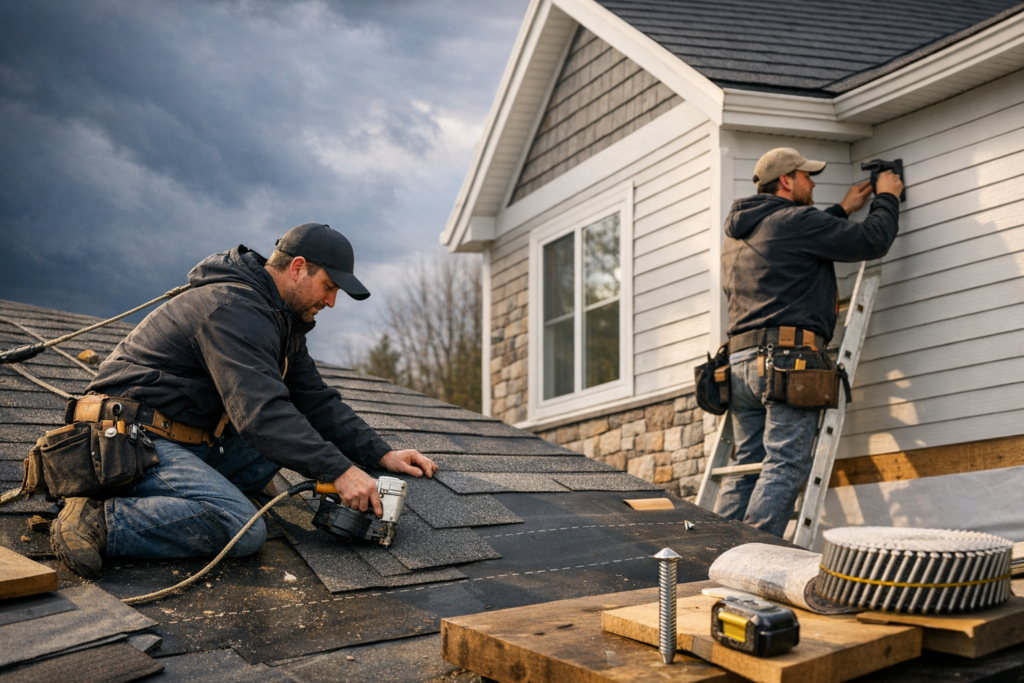
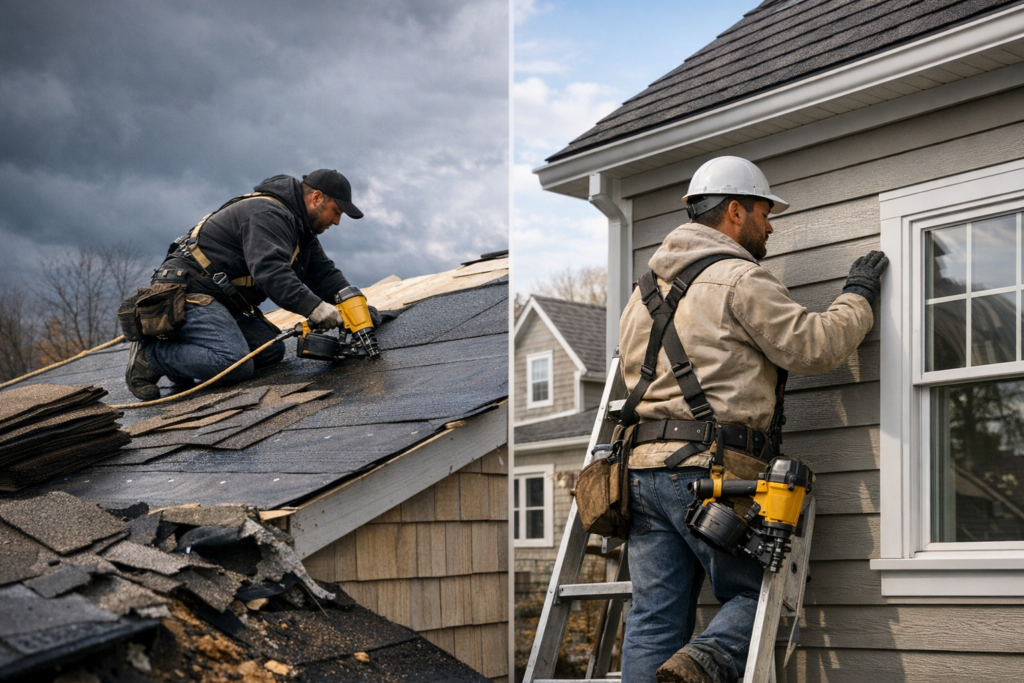
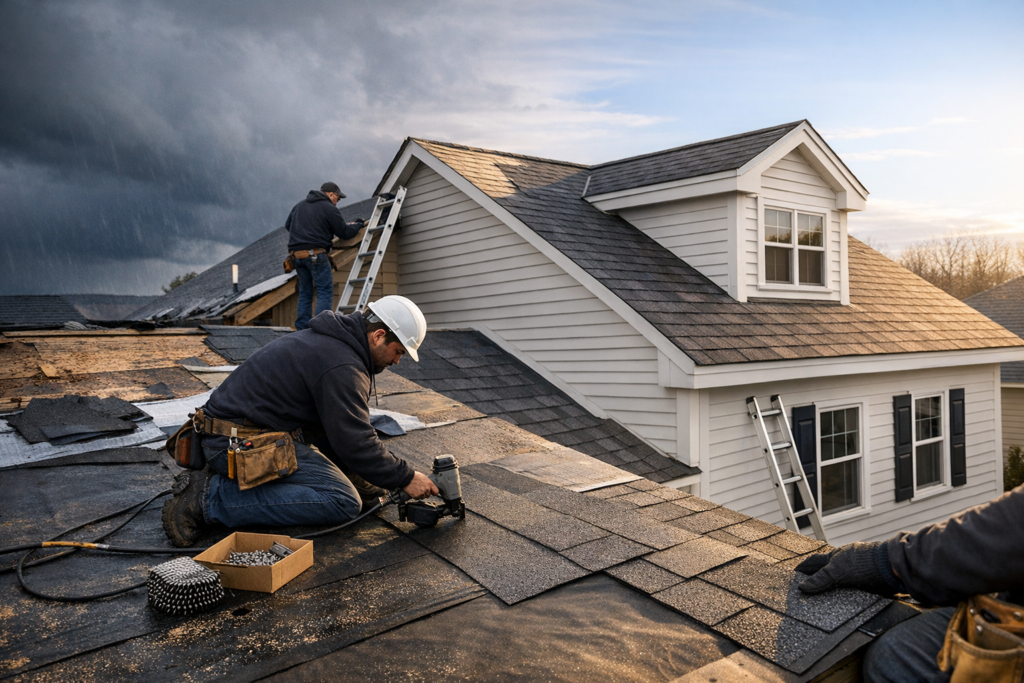
Can You Use a Siding Nailer for Roofing? The Mistake That Ruins Roofs Early. Many homeowners believe a nail gun is a nail gun. They assume that a siding nailer can drive roofing nails as effectively as a roofing nailer. This misconception leads to premature roof failure, particularly under New Hampshire’s nor’easter winds and Northern Massachusetts’s sleet-laden skies. If you live around Nashua, Manchester, Bedford, or Concord, understanding this mistake can save you from leaks that turn into expensive repairs. Problem: The Wrong Tool for the Job When you pick up a siding nailer for roofing tasks, you’re setting yourself up for trouble. When you ignore the subtle differences between tools, you risk compromising the very layers that shield your home. Your roof is more than a cover—it’s your first defense against wind-driven rain in Londonderry and ice dams in Salem. Impact: Early Leaks, Warps, and Code Violations Water finds the smallest gaps. It seeps under misdriven nails, warping decks in Merrimack and causing shingles to lift in Hudson. What starts as a drip becomes a stain; a stain becomes rot. Municipal inspectors in Derry and Concord cite improper fasteners under the International Residential Code. The result? A voided warranty and a roof that fails far too soon. Mechanism: Why Siding Nailers Fall Short A roofing nailer is designed to drive ring-shank nails at consistent depth and angle, meeting manufacturer and code specifications. A siding nailer, by contrast, uses smooth-shank or clipped-head nails that rely on shear alone. That difference may seem subtle—until you feel the wind gust across your shingles. A roof nailed with the wrong tool is like a shield riddled with holes. Sensory hint: imagine the rattling of granules as an ice storm hammers your roof. You need nails that bite into wood and hold fast, not slip under pressure. A roofing nailer’s adjustable pressure (90–120 PSI), calibrated depth control, and dedicated magazine ensure each asphalt shingle stays anchored through cycles of freeze and thaw. Benefits: Why the Right Nailer Matters Contrast this with a roof installed using a siding nailer. Shingles shift. Granules shed. Wind catches and peels. The difference is striking: one roof stands firm, the other fails quietly, then suddenly. By choosing a true roofing nailer: You ensure code compliance and preserve manufacturer warranties. You achieve uniform nail placement—no over-setting, no under-setting. You minimize callbacks and emergency repairs, even after a Manchester hailstorm. You gain peace of mind, knowing your roof is built to face New England’s extremes. Outcome: A Roof That Stands the Test of New England Weather When the first flakes fall in Nashua or sleet lashes Merrimack, you want confidence—predictability in performance. A properly nailed roof resists uplift, seals out moisture, and ages gracefully. You avoid the emotional stress of ceiling stains, the frustration of contractor visits, the dread of insurance claims. Metaphorically, your roof becomes a fortress. Its backbone—the nails—holds strong. Its surface—the shingles—rests in place. The structure remains sound, season after season. FAQ Can I adjust a siding nailer to work like a roofing nailer? No. Even at lower pressure settings, a siding nailer’s magazine and nosepiece aren’t designed for roofing nails. The head style and shank profile differ, and there’s no reliable way to meet roofing codes with a siding nailer. What happens if I use roofing nails in a siding gun? You’ll face misfeeds, jams, and inconsistent depth. Without proper seating, nails either tear through shingles or sit proud, both leading to leaks and wind damage. Are roofing nailers more expensive to maintain? Not significantly. A quality roofing nailer requires periodic cleaning, oiling, and occasional part replacement. Compared to the cost of premature roof failure in Bedford or Derry, maintenance is minimal. How do I choose the right nails for asphalt shingles? Follow the shingle manufacturer’s specifications: typically 12- to 16-gauge, 1¼″–1⅜″ ring-shank nails with full-round or clipped heads. Always verify local code requirements in Salem or Concord. For homeowners in New Hampshire or Massachusetts looking to maintain a safe and reliable home exterior, the team at Revive Roofing & Siding remains available for guidance, inspections, and detailed evaluations. Website: reviveroofingandsidingllc.com Email: reviveroofingandsidingnh@gmail.com Phone: +1 (603) 560-5309

Many homeowners believe a nail gun is a nail gun. They assume that a siding nailer can drive roofing nails as effectively as a roofing nailer. This misconception leads to premature roof failure, particularly under New Hampshire’s nor’easter winds and Northern Massachusetts’s sleet-laden skies. If you live around Nashua, Manchester, Bedford, or Concord, understanding this […]

Roofing Shingles and Safety: Are Modern Shingles Toxic to Your Home or Family?
roofing contractor new hampshire fdbd1300 90d2 4bd8 89fe f1b21037ec6b

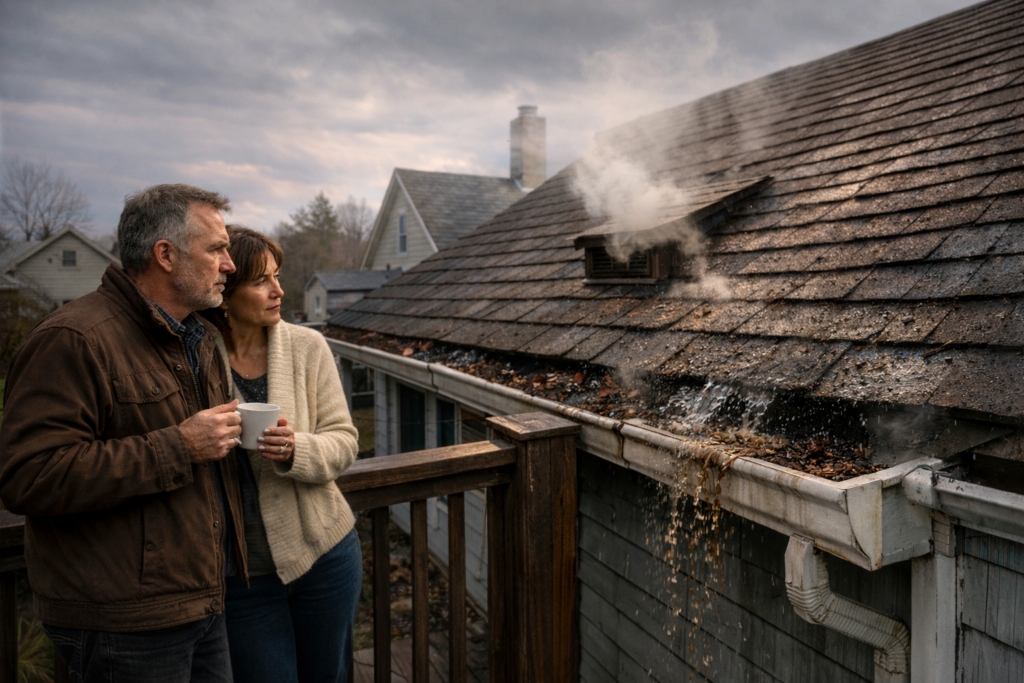
As the crisp New England winds sweep over rooftops from Nashua to Salem, homeowners pause on their porches, cup in hand, and wonder: Are modern shingles silently compromising our families’ health? In a region where storm-ravaged roofs and time-worn clapboards tell decades of stories, concerns about chemical leaching, volatile organic compounds, and aging materials demand […]

Roofing Nail Guns and Siding Nail Guns: Same Tool, Different Consequences for Your Home
roofing contractor new hampshire WhatsApp Image 2025 11 29 at 13.12.32 1

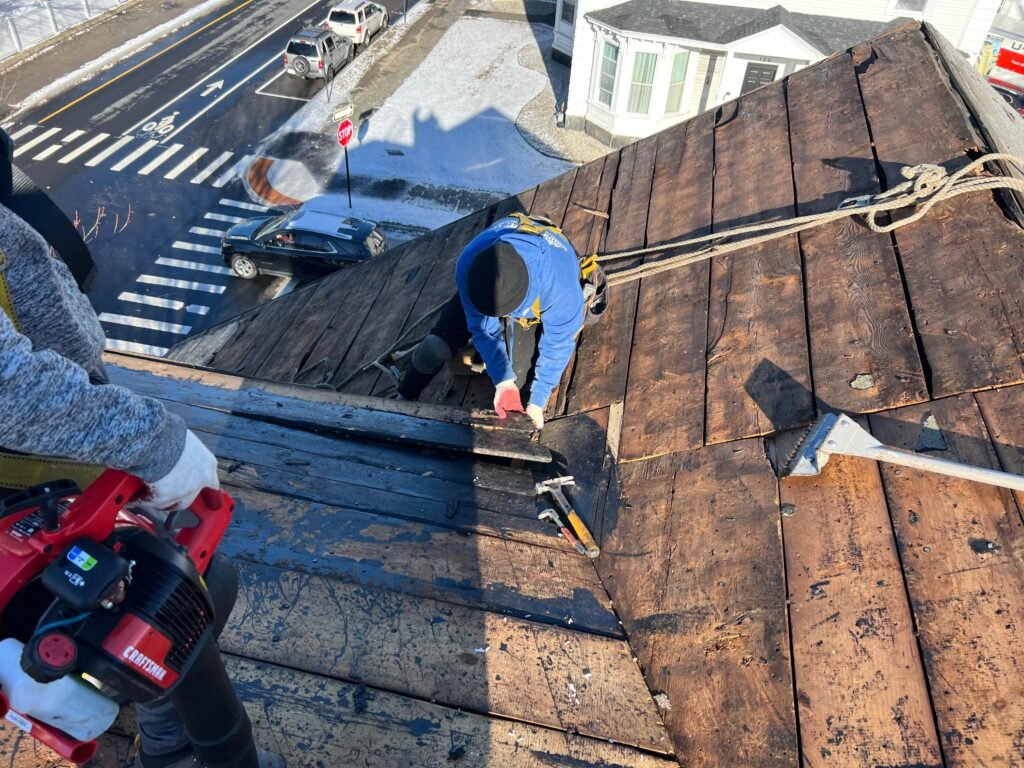
In the dance of New England seasons—from the icy winds off the Merrimack River to the sudden downpours sweeping through Nashua—your home’s exterior faces relentless challenges. The simplest misstep, like using a roofing nail gun on your cedar clapboards, can echo in leaks, splits, and costly repairs. Problem: Nail Gun Mix-Ups in New England Homes […]

Roof Coatings for New England: Which Ones Save You Money?
roofing contractor new hampshire WhatsApp Image 2026 01 23 at 17.34.15

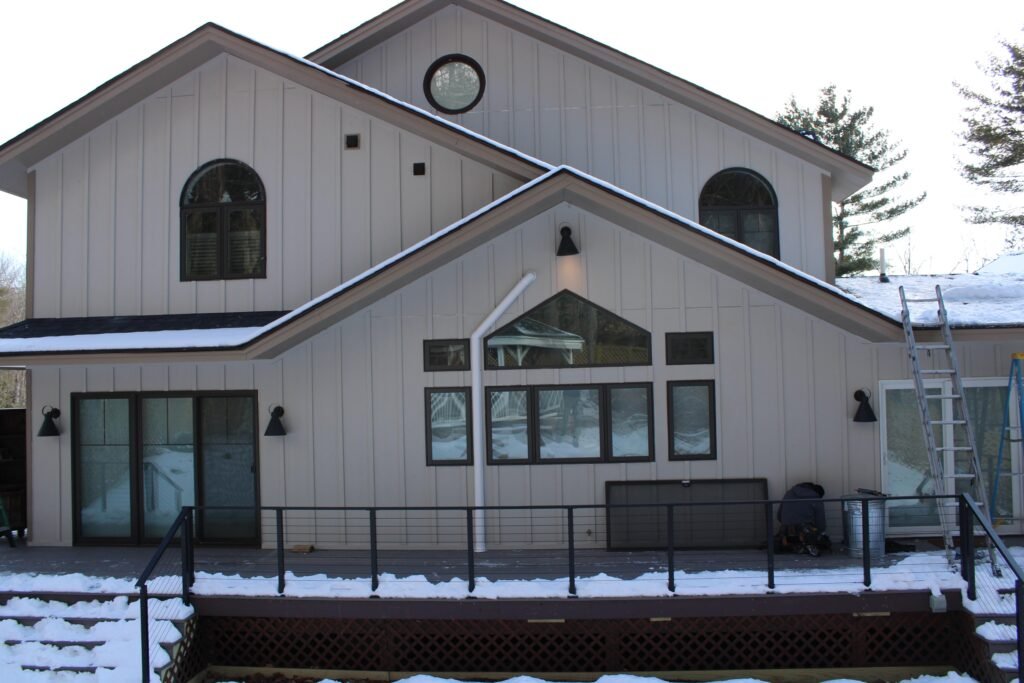
In the heart of New England—where nor’easters howl, winters bite, and spring thaw brings moisture—homeowners from Nashua to Salem face a common challenge: aging roofs under relentless seasons. As shingles wear thin and energy bills climb, the search for savings turns toward a surprising ally: roof coatings. Like a tailored parka for your home, the […]

Do you Know How Snow, Ice & Freeze-Thaw Cycles Affect Your Home’s Roof ?
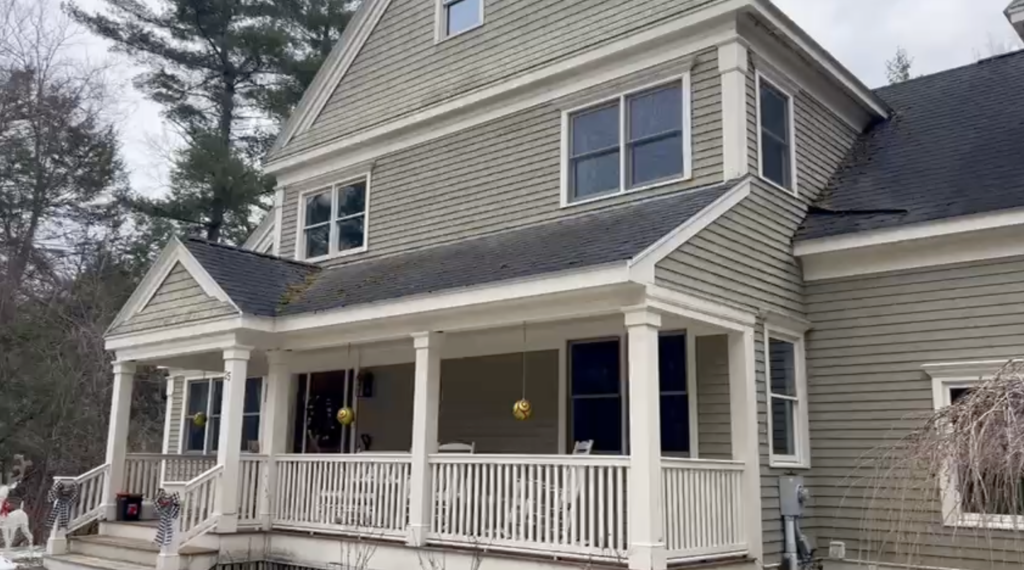
Winter in New England is a study in contrasts: crisp nights, silent snowfall, and the relentless cycle of freeze and thaw. For homeowners from Nashua to Salem, from Concord to Hudson, understanding how snow, ice, and temperature swings affect your roof isn’t just technical—it’s about preserving the safety and comfort of your family.

Winter in New England is a study in contrasts: crisp nights, silent snowfall, and the relentless cycle of freeze and thaw. For homeowners from Nashua to Salem, from Concord to Hudson, understanding how snow, ice, and temperature swings affect your roof isn’t just technical—it’s about preserving the safety and comfort of your family. Problem: Winter […]

How to Deal with Ponding Water on Flat Commercial Roofs

How to Deal with Ponding Water on Flat Commercial - Flat commercial roofs in Southern New Hampshire and Northern Massachusetts often resemble silent pools waiting to tell a story. Whether you’re in Nashua, Manchester, Bedford, Merrimack, Londonderry, Hudson, Derry, Salem, or Concord, the challenge is the same: standing water refusing to drain. In climates where winter’s melting snow meets spring’s sudden downpours, ponding water on a flat roof isn’t just an eyesore—it’s a prelude to leaks, structural strain, and costly repairs.

Flat commercial roofs in Southern New Hampshire and Northern Massachusetts often resemble silent pools waiting to tell a story. Whether you’re in Nashua, Manchester, Bedford, Merrimack, Londonderry, Hudson, Derry, Salem, or Concord, the challenge is the same: standing water refusing to drain. In climates where winter’s melting snow meets spring’s sudden downpours, ponding water on […]

Flat Roof Systems Comparison: TPO vs EPDM vs PVC for MA/NH Businesses

TPO – white, reflective membrane, clean surface, visible heat-welded seams EPDM – black rubber membrane, matte texture, subtle seam tape lines PVC – light-colored membrane with crisp welded seams, slightly smoother finish Each section should look accurate, realistic, and professionally installed, with natural transitions between materials. No labels or text on the image.

In a landscape where winter storms hammer rooftops and spring rains pool on flat surfaces, homeowners in Nashua, Manchester, and beyond face a choice that will shape the safety and efficiency of their homes: selecting the right flat roof system. Between TPO, EPDM, and PVC, each membrane tells a different story—but which armor holds firm […]

Preventive Maintenance for Commercial Roofs in New England’s Climate

Freezing rain in Bedford. Thaw cycles in Merrimack. Nor’easters in Nashua. These forces conspire against asphalt shingles, single-ply membranes, and metal decking alike. Ice dams push upward. Wind drives moisture sideways. UV rays crack sealants. Left unchecked, these small breaches invite bigger trouble.

In the rolling hills of southern New Hampshire and northern Massachusetts, commercial roofs bear the brunt of New England’s mood swings—from frost-laden mornings in Concord to torrential downpours in Salem. Each season writes its own chapter of wear and tear, and each chapter demands a response grounded in expertise, foresight, and unwavering attention to detail. […]