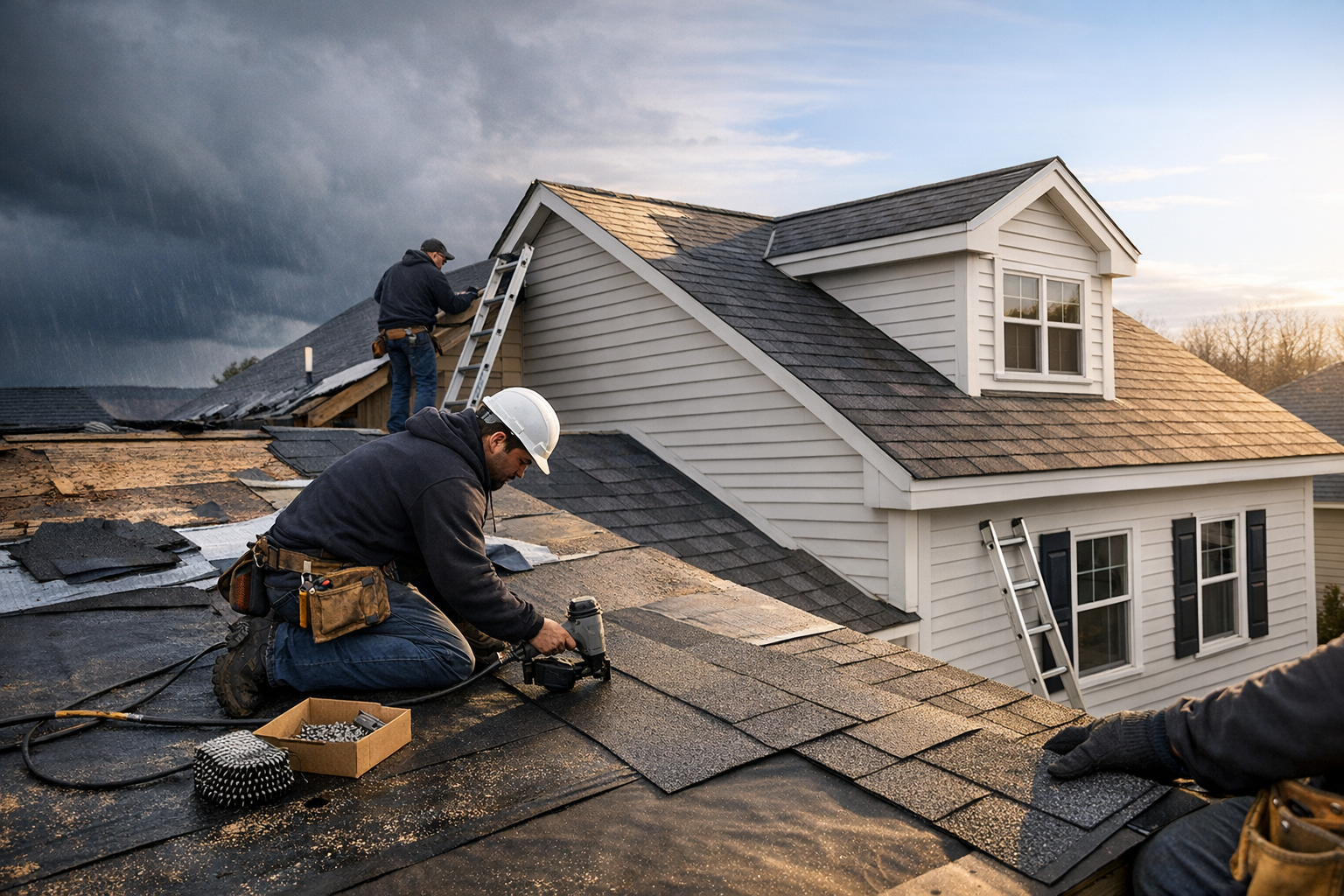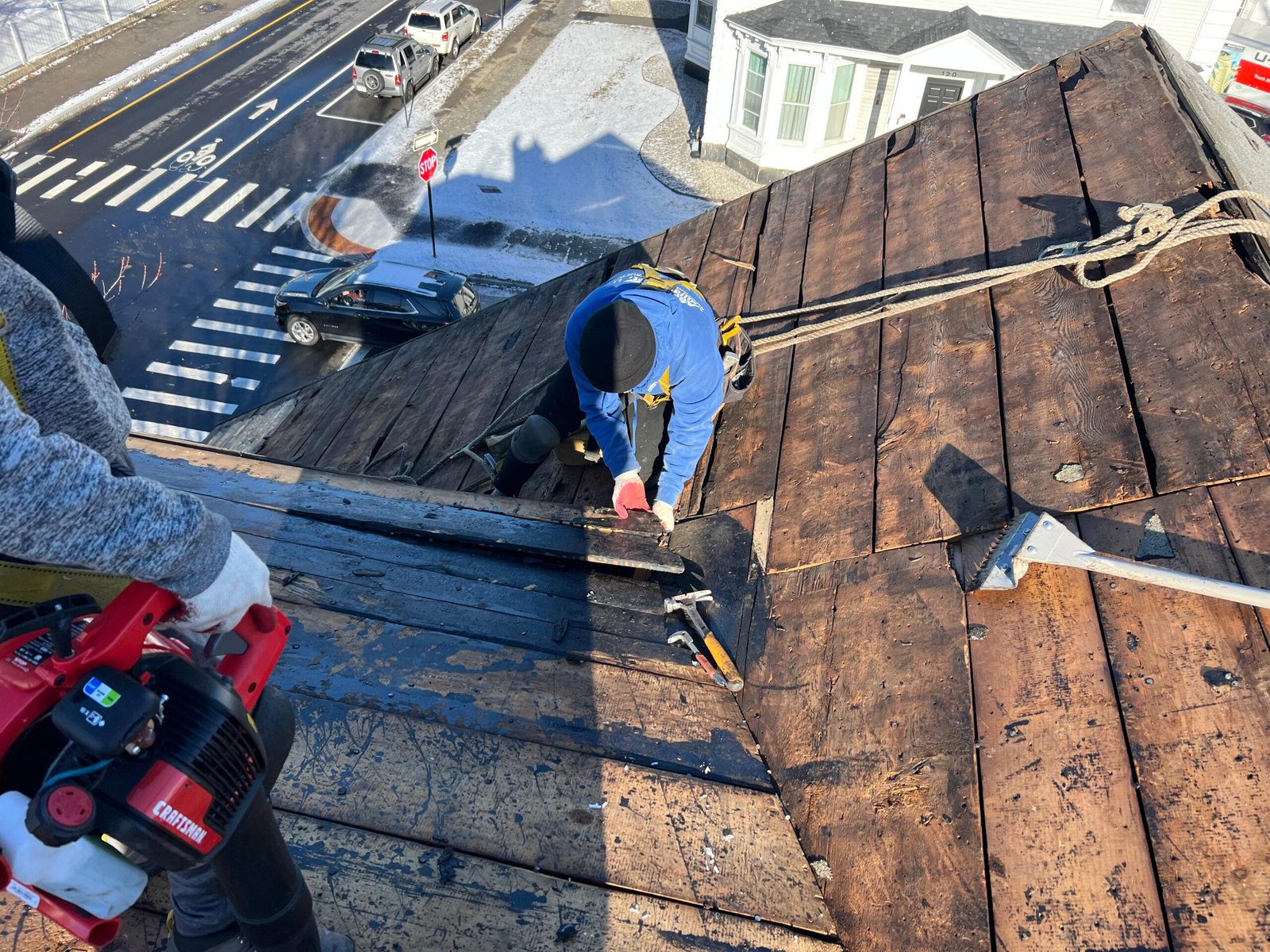

Many homeowners believe a nail gun is a nail gun. They assume that a siding nailer can drive roofing nails as effectively as a roofing nailer. This misconception leads to premature roof failure, particularly under New Hampshire’s nor’easter winds and Northern Massachusetts’s sleet-laden skies. If you live around Nashua, Manchester, Bedford, or Concord, understanding this mistake can save you from leaks that turn into expensive repairs.
Problem: The Wrong Tool for the Job
When you pick up a siding nailer for roofing tasks, you’re setting yourself up for trouble. When you ignore the subtle differences between tools, you risk compromising the very layers that shield your home. Your roof is more than a cover—it’s your first defense against wind-driven rain in Londonderry and ice dams in Salem.
Impact: Early Leaks, Warps, and Code Violations
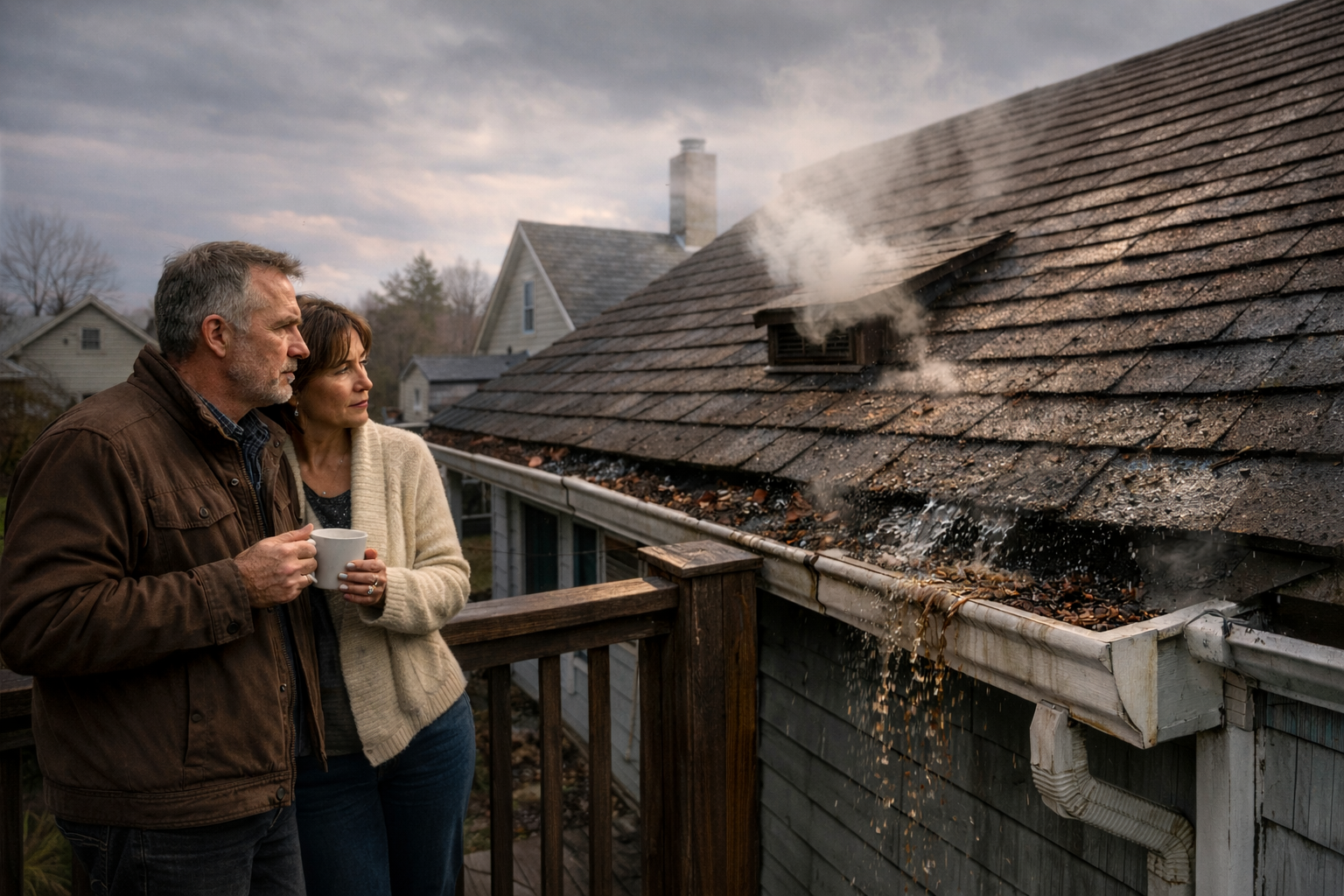
Water finds the smallest gaps. It seeps under misdriven nails, warping decks in Merrimack and causing shingles to lift in Hudson. What starts as a drip becomes a stain; a stain becomes rot. Municipal inspectors in Derry and Concord cite improper fasteners under the International Residential Code. The result? A voided warranty and a roof that fails far too soon.
Mechanism: Why Siding Nailers Fall Short
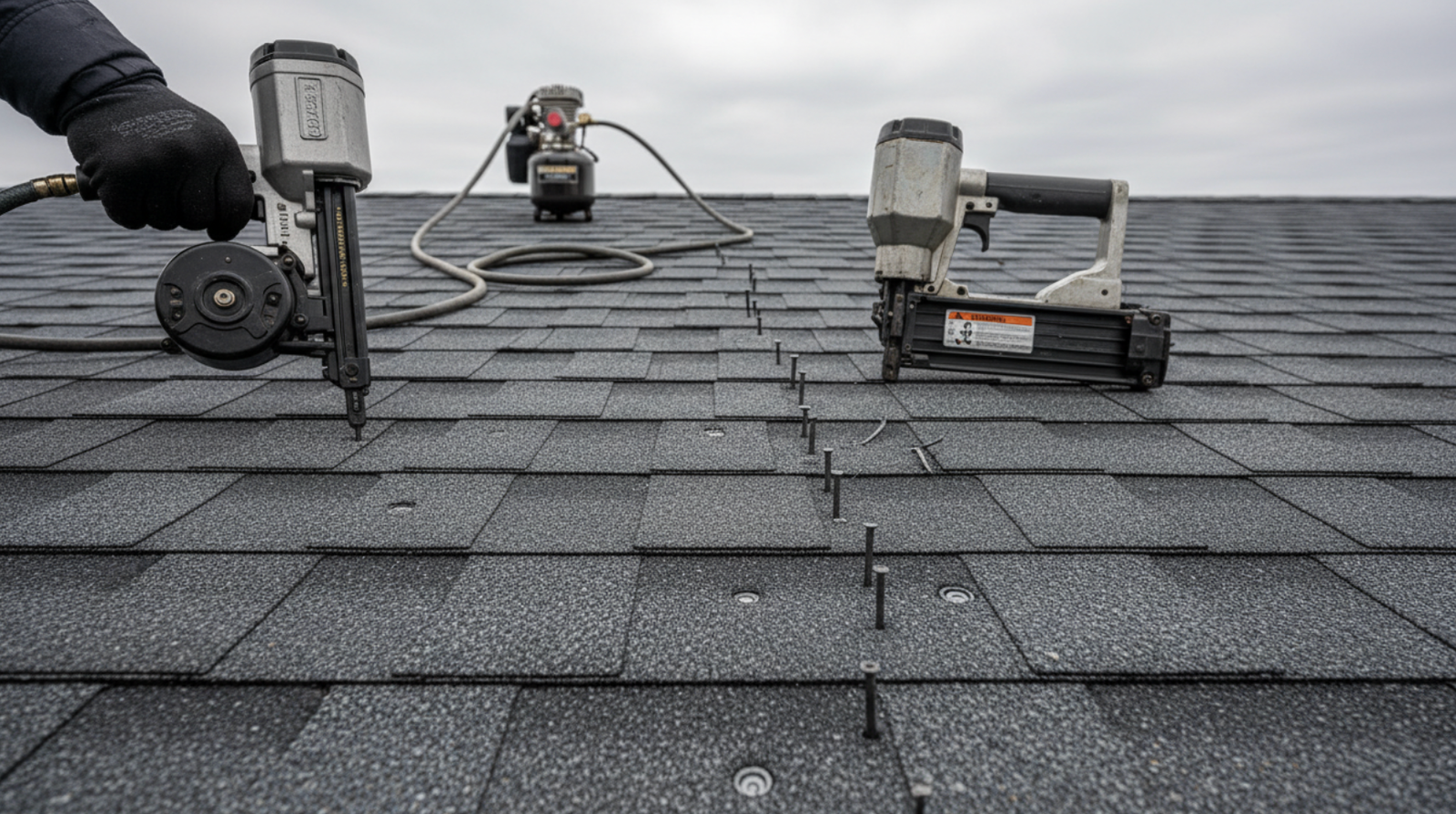
A roofing nailer is designed to drive ring-shank nails at consistent depth and angle, meeting manufacturer and code specifications. A siding nailer, by contrast, uses smooth-shank or clipped-head nails that rely on shear alone. That difference may seem subtle—until you feel the wind gust across your shingles. A roof nailed with the wrong tool is like a shield riddled with holes.
Sensory hint: imagine the rattling of granules as an ice storm hammers your roof. You need nails that bite into wood and hold fast, not slip under pressure. A roofing nailer’s adjustable pressure (90–120 PSI), calibrated depth control, and dedicated magazine ensure each asphalt shingle stays anchored through cycles of freeze and thaw.
Benefits: Why the Right Nailer Matters
Contrast this with a roof installed using a siding nailer. Shingles shift. Granules shed. Wind catches and peels. The difference is striking: one roof stands firm, the other fails quietly, then suddenly. By choosing a true roofing nailer:
- You ensure code compliance and preserve manufacturer warranties.
- You achieve uniform nail placement—no over-setting, no under-setting.
- You minimize callbacks and emergency repairs, even after a Manchester hailstorm.
- You gain peace of mind, knowing your roof is built to face New England’s extremes.
Outcome: A Roof That Stands the Test of New England Weather
When the first flakes fall in Nashua or sleet lashes Merrimack, you want confidence—predictability in performance. A properly nailed roof resists uplift, seals out moisture, and ages gracefully. You avoid the emotional stress of ceiling stains, the frustration of contractor visits, the dread of insurance claims.
Metaphorically, your roof becomes a fortress. Its backbone—the nails—holds strong. Its surface—the shingles—rests in place. The structure remains sound, season after season.
FAQ
Can I adjust a siding nailer to work like a roofing nailer?
No. Even at lower pressure settings, a siding nailer’s magazine and nosepiece aren’t designed for roofing nails. The head style and shank profile differ, and there’s no reliable way to meet roofing codes with a siding nailer.
What happens if I use roofing nails in a siding gun?
You’ll face misfeeds, jams, and inconsistent depth. Without proper seating, nails either tear through shingles or sit proud, both leading to leaks and wind damage.
Are roofing nailers more expensive to maintain?
Not significantly. A quality roofing nailer requires periodic cleaning, oiling, and occasional part replacement. Compared to the cost of premature roof failure in Bedford or Derry, maintenance is minimal.
How do I choose the right nails for asphalt shingles?
Follow the shingle manufacturer’s specifications: typically 12- to 16-gauge, 1¼″–1⅜″ ring-shank nails with full-round or clipped heads. Always verify local code requirements in Salem or Concord.
For homeowners in New Hampshire or Massachusetts looking to maintain a safe and reliable home exterior, the team at Revive Roofing & Siding remains available for guidance, inspections, and detailed evaluations.
Website: reviveroofingandsidingllc.com
Email: reviveroofingandsidingnh@gmail.com
Phone: +1 (603) 560-5309