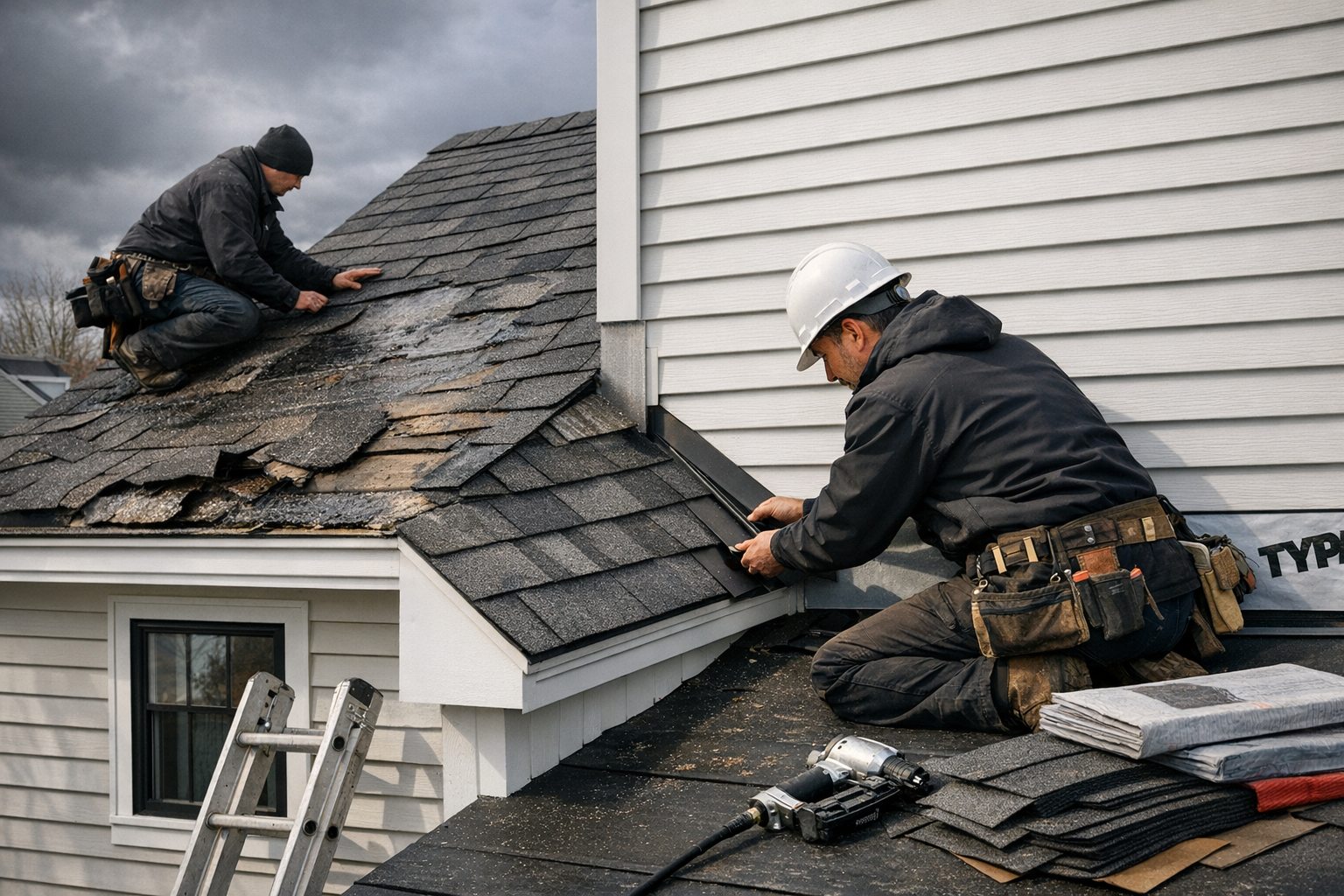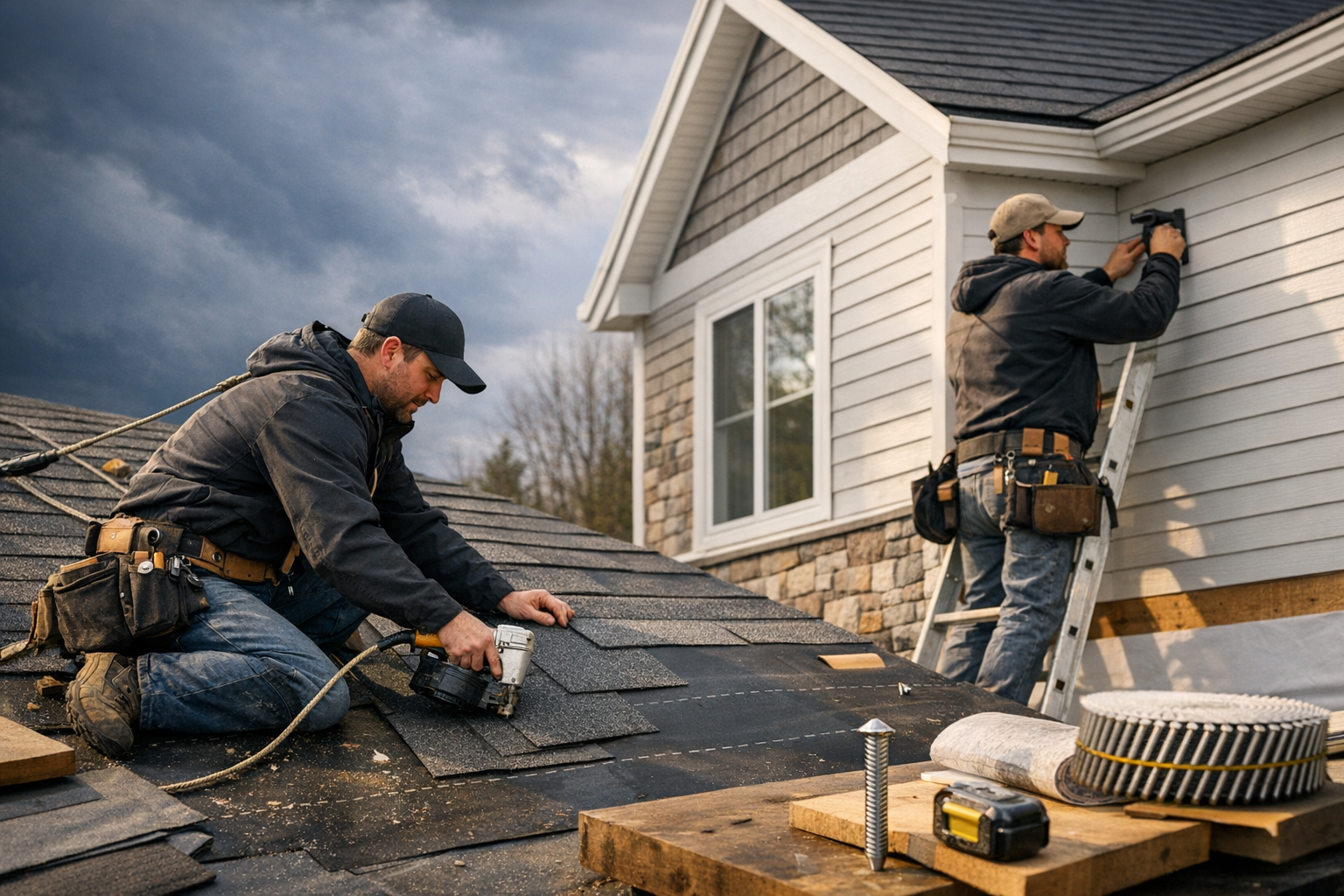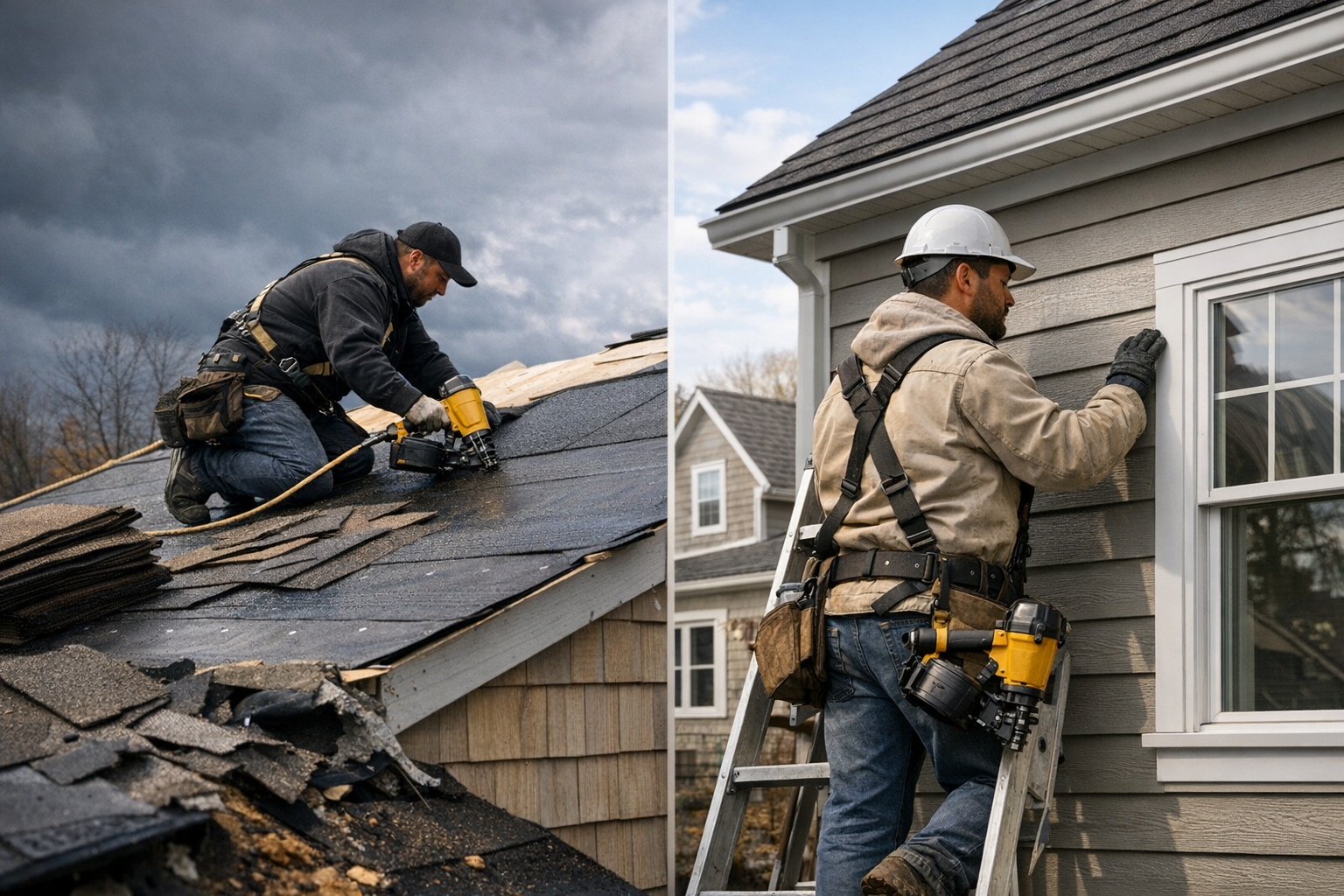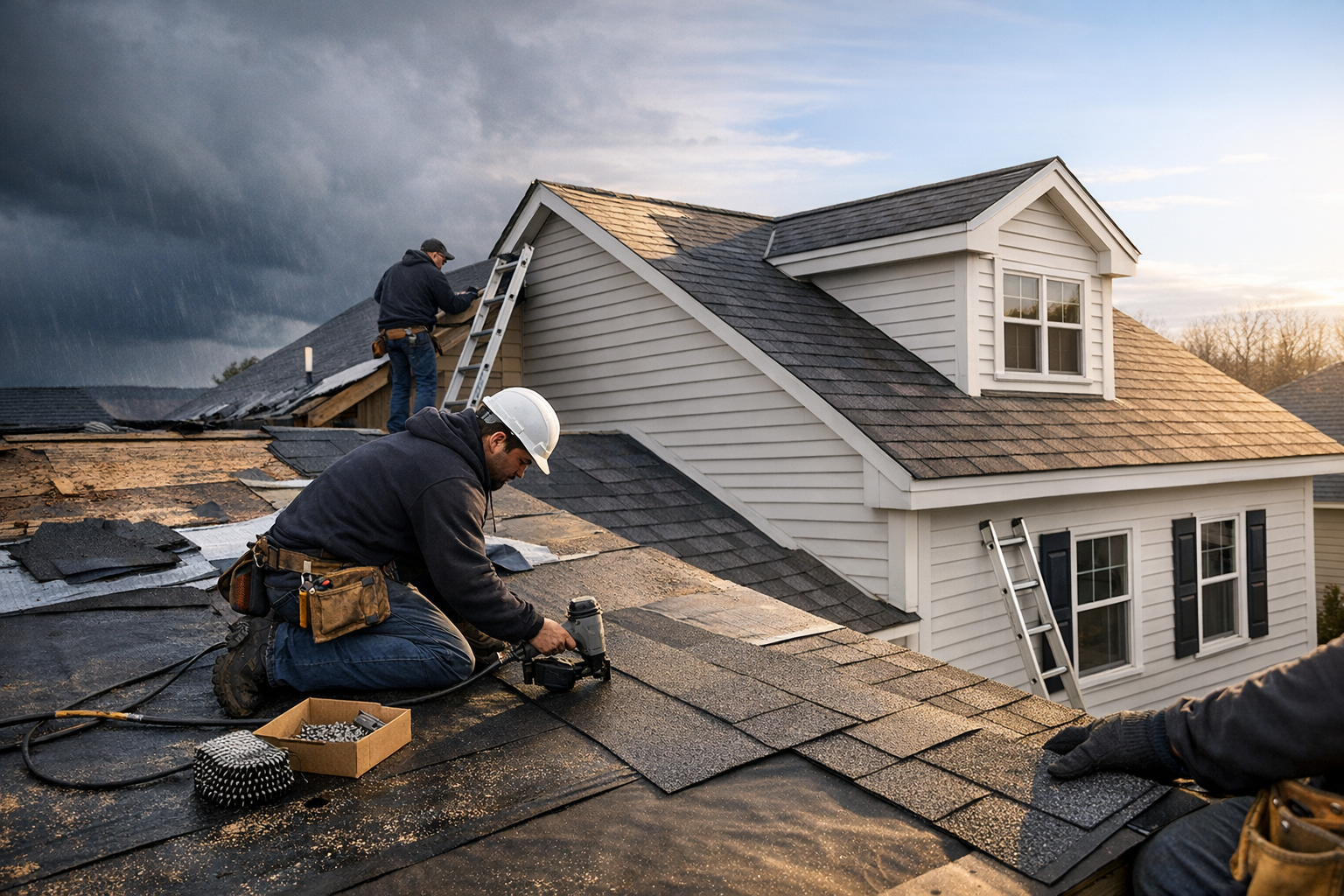

When the Nor’easter wind howls across Bedford and the first flurry settles on your flat roof, you feel a familiar knot of worry. Aging membranes, hidden ice dams, and unseen drips can turn a quiet evening in Concord into a costly repair. But new technology is rewriting the rulebook on flat roof performance in cold-weather states, blending innovation with the steadfast resilience New England homeowners demand.
Problem: The Winter Strain on Traditional Flat Roofs
Flat roofs in Nashua and Merrimack were often built decades ago, designed for mild winters and modest snowfall. They face:
- Heavy snow loads that stress joists
- Freeze–thaw cycles that open cracks
- Ponding water leading to membrane deterioration
- Ice dams that force water under flashing
Left unchecked, these issues invite leaks, mold growth, and structural damage—a creeping threat that any homeowner in Hudson or Derry knows too well.
Impact: From Leaks to Long-Term Costs
The moment a flat roof fails:
- Interior finishes weaken.
- HVAC systems work harder.
- Energy bills spike.
- Stress replaces the comfort of home.
In Salem or Manchester, a single spring thaw can reveal hidden damage that compounds until summer. The financial toll rises. So does the frustration.
Mechanism: How New Technology Shifts the Balance
Enter a suite of innovations designed for cold-weather endurance:
1. Advanced Membranes
Modern TPO and EPDM roofing systems come with reinforced scrims and high-performance polymers. They resist punctures, block UV rays, and bounce back after heavy snow loads.
2. High-R-Value Insulation
Polyiso boards and spray-foam layers minimize thermal bridging and keep interior warmth where it belongs. In Bedford and Londonderry homes, this translates to:
- Reduced ice dam formation
- Lower heating costs
- Enhanced moisture control
3. Integrated Heating and Sensors
Self-regulating heat cables and IoT humidity sensors create a responsive roof system. When a sensor in Merrimack detects rising moisture, targeted heating elements activate—preventing freeze build-up before it starts.
4. Reflective and Green Roof Options
Solar reflective coatings bounce back up to 85% of solar energy, slowing melt–freeze cycles. For eco-minded homeowners, lightweight green roofs add insulation, absorb snowmelt, and introduce a layer of natural filtration.
Benefits: Transformation in Real Time
These combined technologies deliver palpable advantages:
- Predictable performance under heavy snow
- Significant reduction in maintenance calls
- Enhanced comfort through consistent indoor temperatures
- Extended membrane lifespan—often beyond 30 years
The metamorphosis is clear. What once felt vulnerable now stands secure—like a fortress quietly bracing against winter’s onslaught.
Outcome: Peace of Mind for Northern Homeowners
Imagine a December storm rolling through Hudson without a hint of ponding water. Picture your Manchester flat roof shrugging off ice dams, keeping ceilings dry and energy bills steady. Advanced roofing systems aren’t just a cost—they’re an investment in predictability, security, and the warmth of home.
In the tapestry of New England weather, innovations in flat roof technology weave in reassurance. They honor local roofing codes, respect architectural styles, and adapt to the unique challenges of Southern New Hampshire and Northern Massachusetts.
FAQ
How long do modern flat roofing systems last in cold climates?
With high-performance membranes like TPO or EPDM, combined with proper insulation and maintenance, homeowners can expect 25–30 years of reliable service—even under heavy snow loads common in Concord and Salem.
Will heated roof cables significantly increase my energy bill?
Self-regulating cables draw minimal power, activating only when temperatures dip below set thresholds. Many homeowners report less than a 5% rise in overall winter energy consumption—often offset by savings from reduced ice-dam damage.
Are green roofs practical in New Hampshire’s winter?
Yes. Lightweight extensive green systems add insulation and slow snowmelt. With proper drainage layers and root barriers, plant communities survive freeze–thaw cycles, offering both thermal and ecological benefits.
What maintenance do these new systems require?
Routine inspections in spring and fall help clear debris, check sensor functionality, and verify membrane integrity. Professional evaluations every 3–5 years ensure long-term performance without surprises.
For homeowners in New Hampshire or Massachusetts looking to maintain a safe and reliable home exterior, the team at Revive Roofing & Siding remains available for guidance, inspections, and detailed evaluations.
Website: reviveroofingandsidingllc.com
Email: reviveroofingandsidingnh@gmail.com
Phone: +1 (603) 560-5309