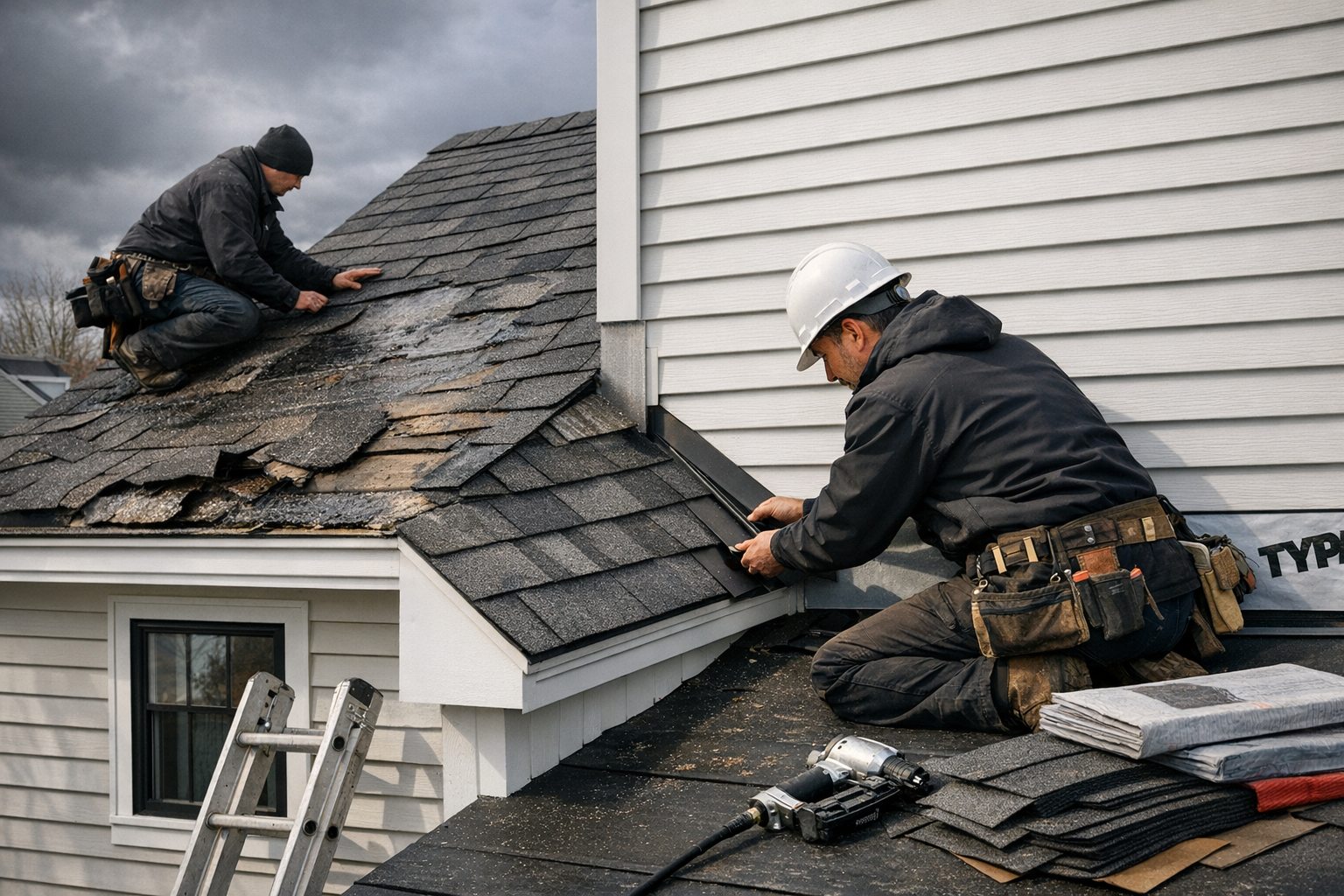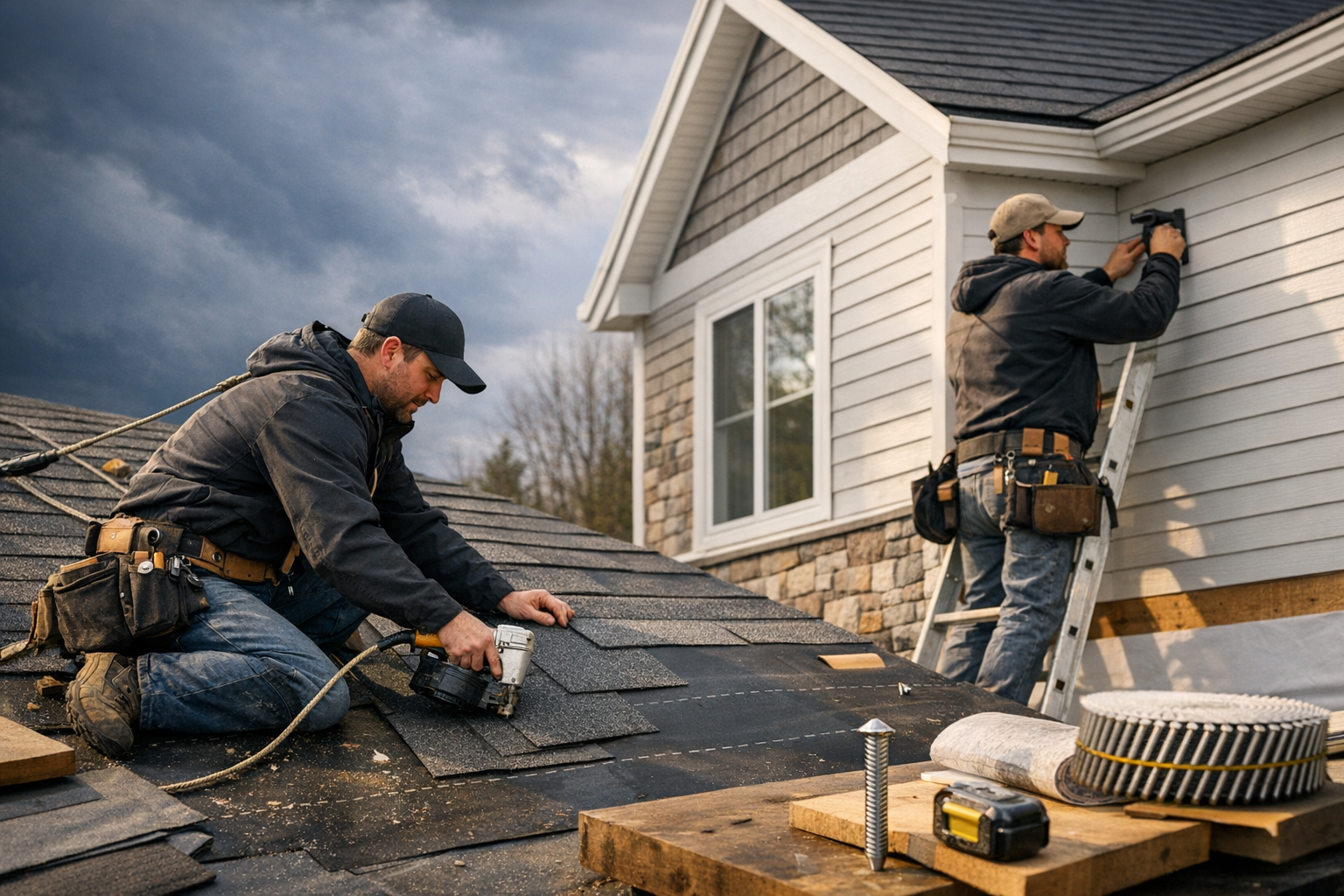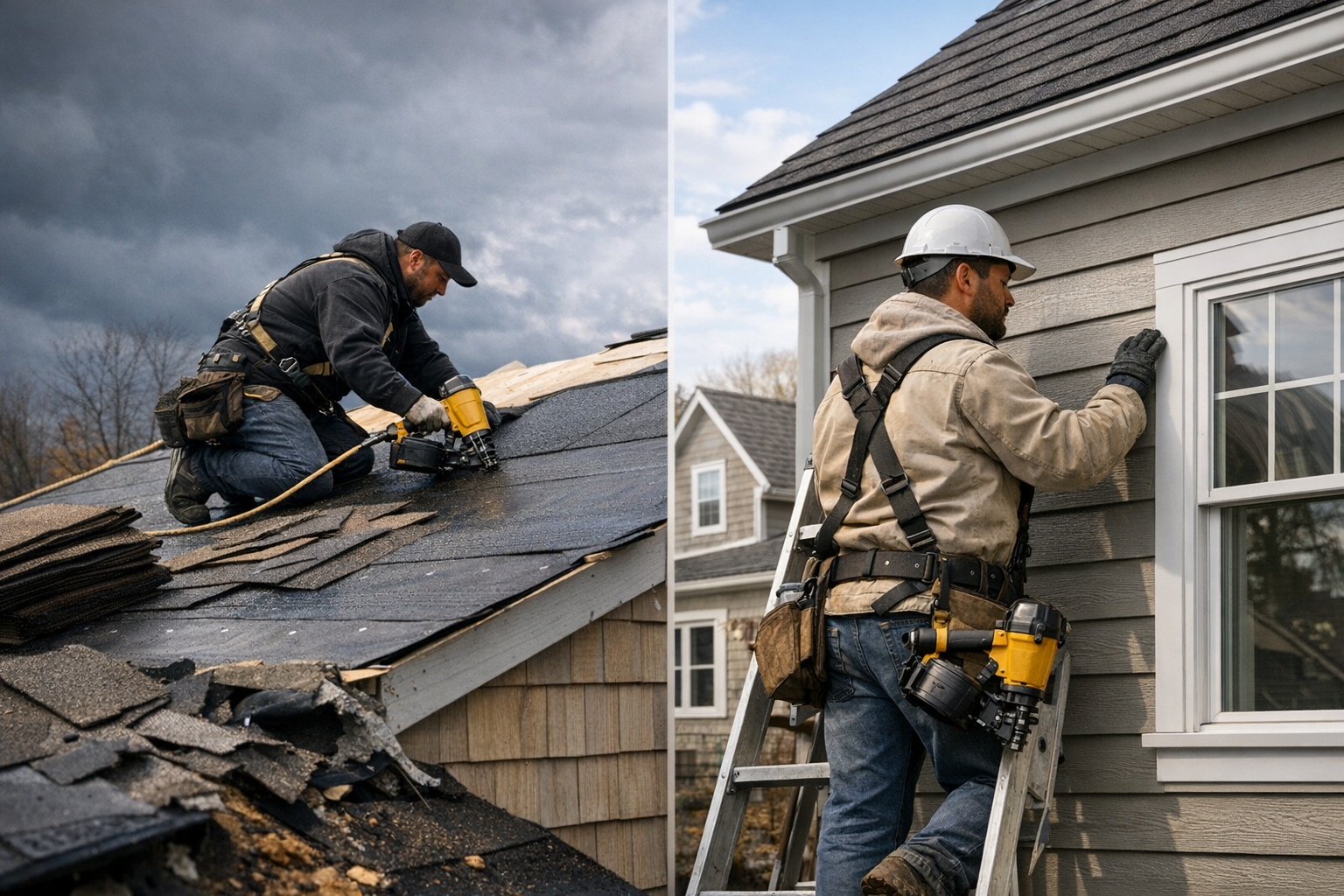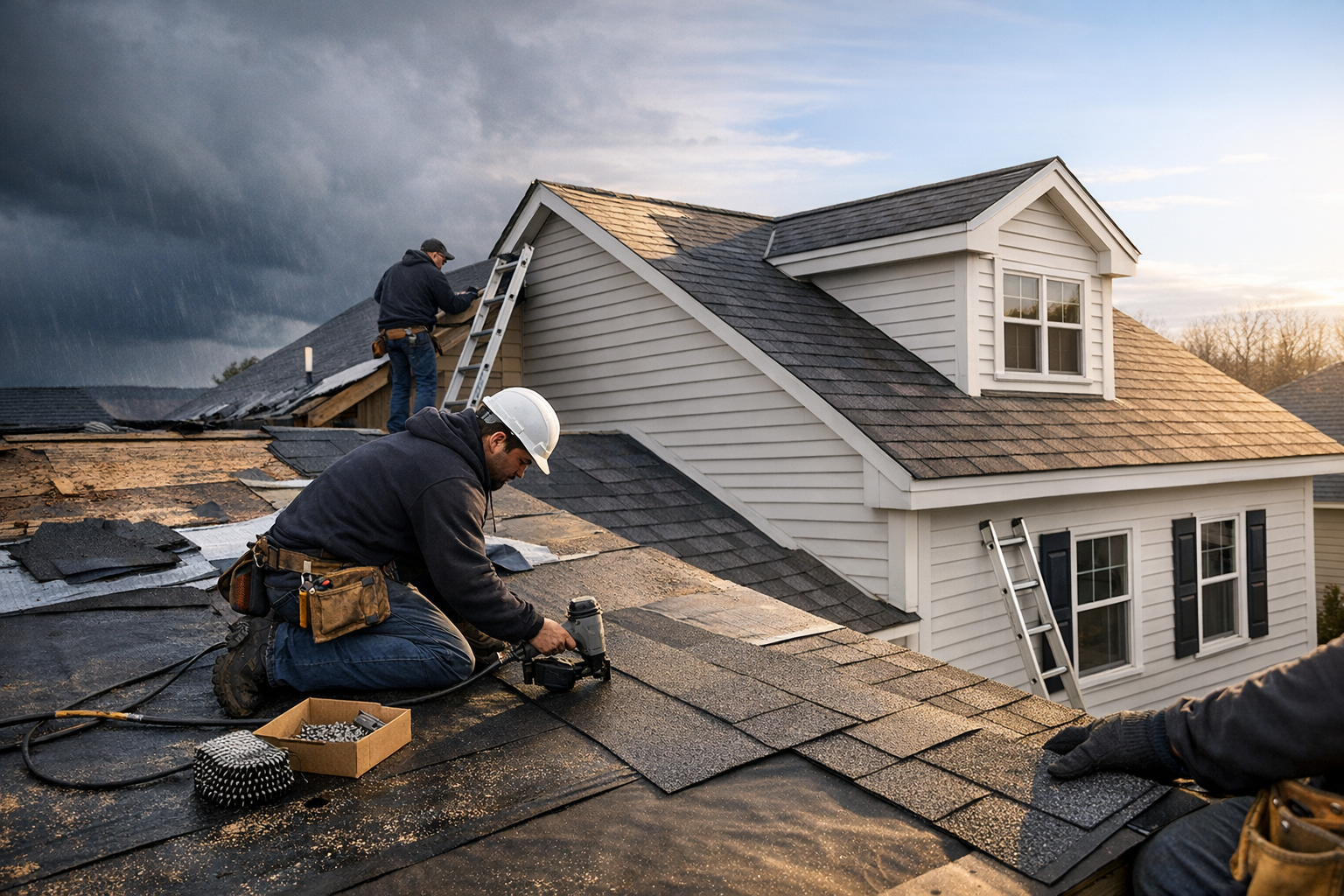

In Southern New Hampshire and Northern Massachusetts, from Nashua’s bustling storefronts to Salem’s historic mills, commercial roofing faces a relentless test: ice-laden winters, spring hailstorms, summer sun’s glare. Business owners know the drill. They know the drafts. They know the leaks. And they know that an aging roof can turn into a silent liability—dripping costs, drenching damage, dwindling comfort.
Problem: Aging Roofs Meet Modern Demands
An EPDM membrane installed twenty years ago in Manchester might have withstood the elements once. Today, its seams creep open. In Bedford, gravel-topped BUR systems crack under temperature swings. In Concord, standing-seam metal roofs flex and groan, feeding anxiety with every gust. We see the cracks. We feel the draft. We hear the rain.
Impact: Weather Threats and Operational Costs
When a roof fails, it’s more than water intrusion. Insulation soaks up moisture—R-value plunges. HVAC systems strain; energy bills spike. Inventory risks mold, staff face safety hazards, operations stall. In Derry and Merrimack, a minor leak can bloom into a major shutdown. Contrast certainty with risk: predictable maintenance beats emergency repairs every time.
Mechanism: Sustainable Roofing Solutions Explained
How do you build resilience into your building envelope? Here’s the roadmap:
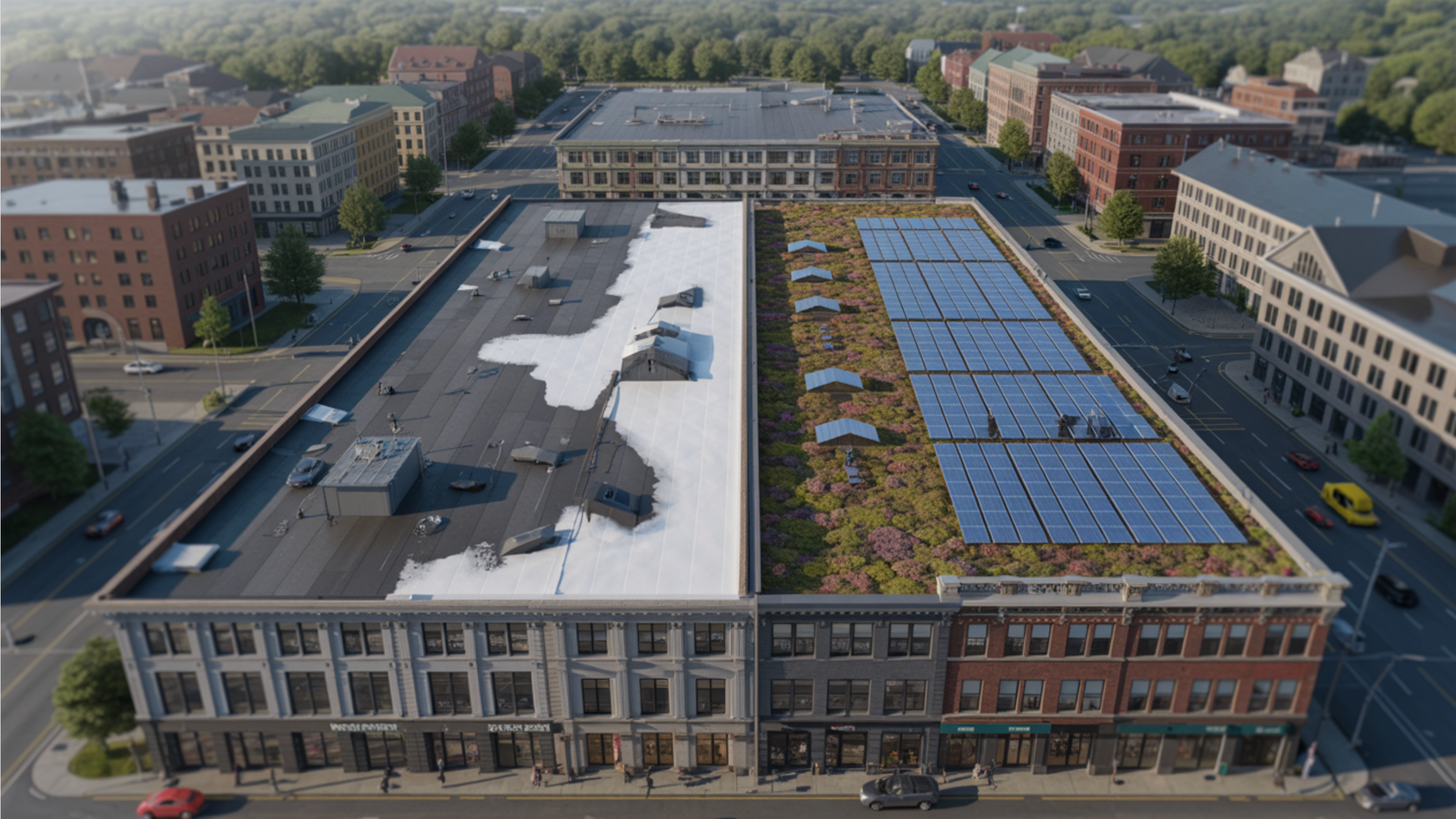
1. Cool Roofing Membranes – High Solar Reflectance Index (SRI) coatings on TPO or PVC reflect solar heat, cutting cooling loads by up to 20%. In Hudson’s humid summers, that matters.
2. Green Roof Systems – Intensive or extensive vegetative layers cushion hail, absorb rainwater, extend membrane life by 50%. Thermal mass regulates temperature swings in Londonderry’s climate.
3. Enhanced Insulation – R-30 or higher polyiso boards paired with tapered systems eliminate ponding water. Seamless thermal barriers curb heat loss in Salem’s sub-zero nights.
4. Advanced Coatings – Acrylic and silicone roof coatings seal micro-cracks, resist UV degradation, and add years to EPDM or modified bitumen roofs without teardown.
5. Solar Integration – Photovoltaic panels anchored to ballast or rail systems generate renewable energy, offsetting electrical costs and earning LEED credits.
Benefits: Long-Term Gains for Your Business
Each solution weighs cost against value:
• Energy Efficiency – Lower utility bills in Nashua, Manchester, Bedford.
• Durability – Membranes rated for 25-year warranties stand up to New England storms.
• Sustainability – Green roofs and solar reduce carbon footprint and earn local incentives.
• Predictable Maintenance – Fewer emergency calls. Fewer interruptions. More peace of mind.
Contrast the old cycle—repair, leak, repair—against a streamlined program: planned inspections, targeted upgrades, longevity.
Outcome: A Resilient Roof for a Resilient Enterprise
Imagine a Concord warehouse where summer glare bounces off a cool roof; imagine a Merrimack office with lush rooftop gardens insulating boardrooms; imagine a Derry factory powering itself with rooftop solar. Transformation isn’t hype. It’s engineered. It’s tested. It’s time-tested in the harshest New England seasons.
Trust endures. Trust secures. Trust transforms a building into a sustainable asset.
FAQ
What is the average lifespan of a TPO roof in New Hampshire?
With proper installation and annual inspections, a quality TPO membrane achieves 20–30 years of service. Reflective pigments help resist UV degradation common in NH’s high-altitude sun exposure.
How much can a green roof reduce stormwater runoff?
Extensive green roofs can retain up to 60% of annual rainfall, while intensive systems—with deeper substrate—can exceed 80%, easing load on local drainage systems in Hudson or Salem.
Are there tax incentives for sustainable commercial roofing in Massachusetts?
Yes. Massachusetts offers incentives through the SMART program for solar integration and state tax credits for energy-efficient upgrades. Bedford and Merrimack businesses often combine local grants with federal deductions.
How often should I schedule roof inspections?
Twice a year—spring and fall—plus after major storms. Regular checks in Londonderry and Manchester detect membrane fatigue before leaks emerge.
For homeowners in New Hampshire or Massachusetts looking to maintain a safe and reliable home exterior, the team at Revive Roofing & Siding remains available for guidance, inspections, and detailed evaluations.
Website: reviveroofingandsidingllc.com
Email: reviveroofingandsidingnh@gmail.com
Phone: +1 (603) 560-5309