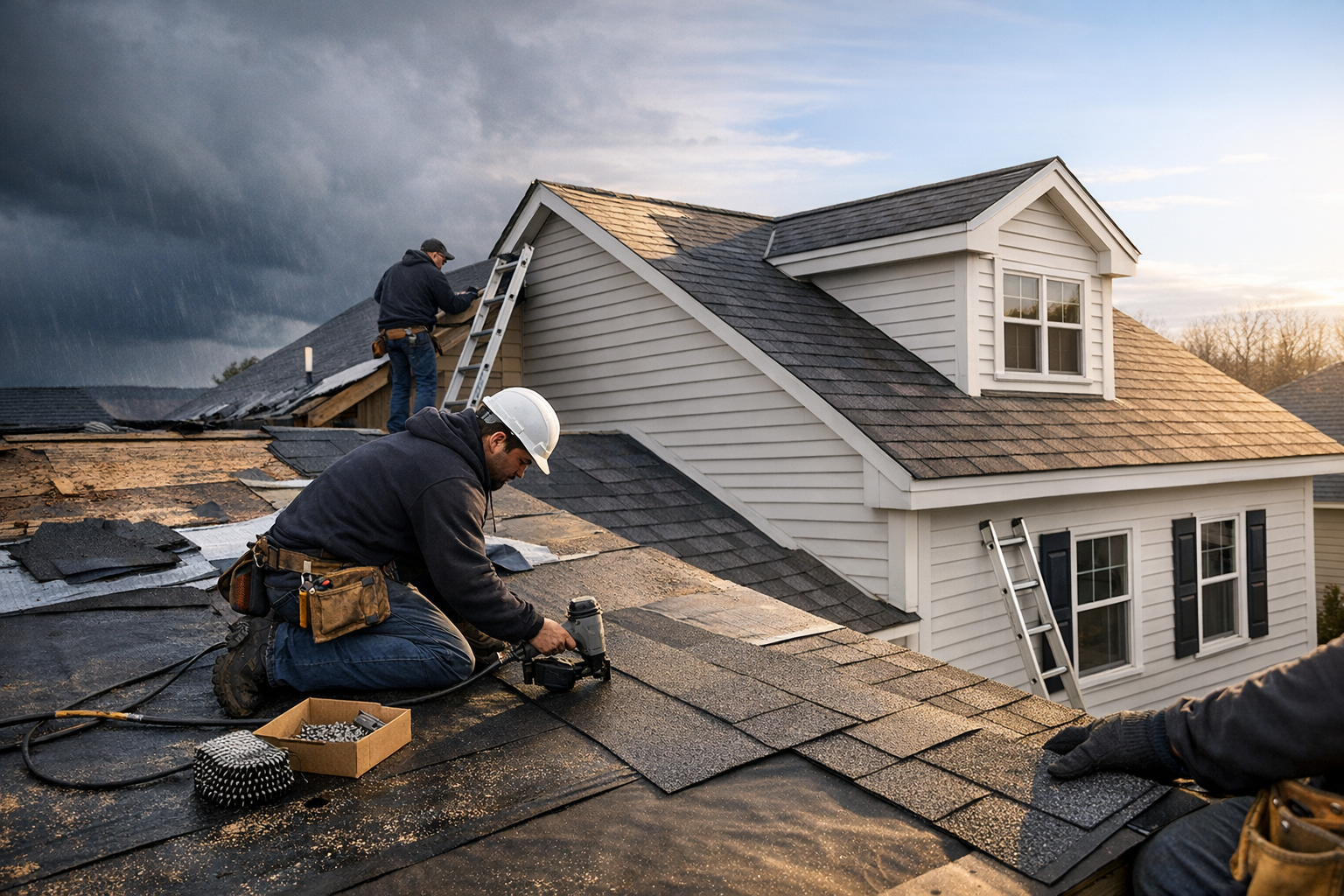
Your roof is your home’s first line of defense against New England’s capricious skies—from the icy gusts in Nashua to the driving rains in Salem. Yet hidden beneath the shingles lies a subtle but critical issue: when siding nails meet roofing materials, the result is a weakened shield and a shortened roof lifespan.
Problem: The Hidden Cost of Mixing Siding and Roofing Nails
In Bedford and Merrimack, homeowners often tackle exterior repairs themselves. They carry a box of siding nails up to the roof, convinced that “a nail is a nail.” But siding nails lack the specialized coatings, length, and head design of true roofing fasteners. The mismatch seems trivial—until the first storm hits.
Impact: How Nail Incompatibility Accelerates Roof Failure
When siding nails puncture shingles, they invite trouble. Water infiltrates micro-gaps, seeping into underlayment and decking. Freeze-thaw cycles in Concord or Derry turn trapped moisture into expanding ice. Shingle granules loosen. Boards warp. Leaks appear behind insulation. What began as a minor shortcut becomes a major repair bill.
Mechanism: Why Siding Nails and Roofing Nails Aren’t Interchangeable
The secret lies in fastener compatibility:
– Coating: Roofing nails boast a weather-resistant layer to prevent nail corrosion, while siding nails often use thinner galvanization.
– Length and Gauge: Roofing nails are longer and thicker, piercing decking at optimal depth for wind uplift resistance. Siding nails fall short—literally.
– Head Design: A broad, textured head clamps shingles firmly against wind and ice dams. Narrow nail heads leave shingles vulnerable to shear.
Engineers design roofing nails to meet ASTM standards for shingle manufacturers. Deviating from those specs disrupts shingle integrity and voids warranties across Hudson and Londonderry alike.
Benefits: The Transformation of Proper Fastener Use
Choosing the right nail isn’t just code compliance. It’s a long-term investment in roof lifespan and weather resilience. With the correct roofing nails:
– You secure each shingle against hurricanes and Nor’easters.
– You preserve the underlayment’s waterproofing seal.
– You maintain manufacturer warranties—no surprise out-of-pocket costs.
The difference feels like swapping a leaky bucket for an armored vault.
Outcome: A Roof That Stands the Test of Time
In Manchester or Salem, homeowners breathe easier knowing their roof can shed snow loads and shrug off gale-force winds. When nails are matched to purpose, the whole system works in harmony:
When roofing nails fit their role, moisture stays out.
When materials align, warranties stay intact.
When tradition meets technique, your roof delivers decades of dependable shelter.
Frequently Asked Questions
Can I use siding nails in a pinch on my roof?
While tempting for quick fixes, siding nails lack the length, gauge, and coating required for roofing applications. Their use increases risk of nail corrosion, leaks, and voided warranties.
How do I identify proper roofing nails?
Look for thicker shank gauges, broad textured heads, and heavy-duty coatings certified to ASTM standards. Roofing nails are usually 1¼” to 1½” long—long enough for full deck penetration.
What happens if roofing nails back out after installation?
Backed-out nails create lifting edges under shingles, allowing wind to catch and tear at the seal. Over time, water intrusion damages decking and insulation, leading to rot and mold.
Are stainless steel nails better than galvanized ones?
Stainless steel offers superior corrosion resistance—ideal in coastal areas like Salem. However, high-galvanized or vinyl-coated roofing nails also meet performance standards for most New Hampshire climates.
How often should I inspect nail condition on my roof?
Conduct a visual check after major storms. Inside the attic, look for light leaks or staining around nail lines. Regular home exterior maintenance prevents small issues from becoming major repairs.
For homeowners in New Hampshire or Massachusetts looking to maintain a safe and reliable home exterior, the team at Revive Roofing & Siding remains available for guidance, inspections, and detailed evaluations.
Website: reviveroofingandsidingllc.com
Email: reviveroofingandsidingnh@gmail.com
Phone: +1 (603) 560-5309