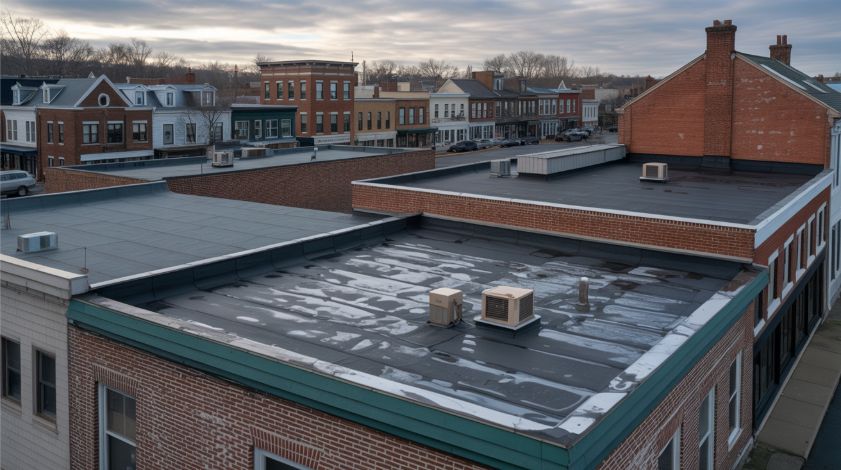
In the rolling hills of southern New Hampshire and northern Massachusetts, commercial roofs bear the brunt of New England’s mood swings—from frost-laden mornings in Concord to torrential downpours in Salem. Each season writes its own chapter of wear and tear, and each chapter demands a response grounded in expertise, foresight, and unwavering attention to detail.
Problem: The Challenge of New England’s Climate on Commercial Roofs
Freezing rain in Bedford. Thaw cycles in Merrimack. Nor’easters in Nashua. These forces conspire against asphalt shingles, single-ply membranes, and metal decking alike. Ice dams push upward. Wind drives moisture sideways. UV rays crack sealants. Left unchecked, these small breaches invite bigger trouble.
The crack of ice. The drip of water. The dread of hidden leaks.
Impact: When Small Issues Become Big Costs
In Manchester, a minor membrane tear during winter roofing can bloom into major storm damage by spring. In Derry, clogged drains may quietly undermine insulation, inflating energy bills through every season. Reactive roof repair visits spike costs and disrupt operations. Predictable budgeting turns into unpredictable expenditures. Every delay amplifies risk—and expense.
Mechanism: How Preventive Maintenance Works
1. Regular Roof Inspection
Scheduled twice yearly—in late spring and early fall—a detailed roof inspection uncovers vulnerabilities before storms strike. From Hudson’s hail-prone skies to Londonderry’s winter storms, trained technicians check seams, flashings, fasteners, and drains. Their eyes track hairline cracks and pinholes often invisible from ground level.
2. Cleaning and Debris Removal
Leaves, gravel, and residual ice form a silent threat. Gutters clogged near Merrimack’s pines can force water to back up under the membrane. Simple cleaning restores free flow, reduces standing water, and preserves the integrity of drainage planes.
3. Flashing and Sealant Upkeep
Sealants harden under UV exposure. Flashing loosens under thermal cycling. Technicians reseal penetrations around vents and skylights, replace worn flashing, and reinforce lap joints—critical steps for roof longevity in a region where spring showers follow winter thaw without pause.
4. Membrane and Shingle Integrity
Inspecting for blistering, curling, and seam separation—in commercial roofing systems from single-ply to built-up membranes—ensures early correction. Patching minor tears prevents water intrusion and preserves thermal performance throughout the year.
Benefits: What Preventive Maintenance Delivers
Proactive care transforms roofing from a recurring liability into a predictable asset. Routine roof maintenance drives down emergency repair calls. It shields tenants, protects inventory, and avoids operational downtime. It extends warranty compliance and upholds local roofing codes across southern New Hampshire and northern Massachusetts.
Cost savings compound over years. Energy efficiency holds steady, even under New England’s fickle skies. Peace of mind takes root.
Outcome: A Roof That Stands the Test
From Concord to Nashua, from Salem to Derry, well-maintained roofs age gracefully. They shrug off ice dams, shrug off wind gusts, shrug off scorching summer sun. They embody security, predictability, and longevity.
A shield forged through intentional care.
FAQ
How often should commercial roofs be inspected in New England?
Experts recommend at least two inspections per year—once in spring, once in fall—to address damage from winter roofing and prepare for storm seasons.
What are the warning signs of roof damage after a Nor’easter?
Look for water stains on ceiling tiles, peeling or blistering membranes, loose gravel, and sagging areas. Timely detection prevents more extensive roof repair.
Can preventive maintenance extend a roof’s warranty?
Yes. Most manufacturers require documented annual maintenance to keep warranties valid. This includes debris removal, sealant checks, and professional inspections.
Is it necessary to clear snow manually from commercial roofs?
Partial removal near drains can help prevent ice dams, but full-scale manual clearing can risk membrane damage. Professional teams use safe, non-invasive methods aligned with winter roofing best practices.
How does preventive roofing compare to reactive repairs?
Preventive roofing prioritizes small fixes early, reducing overall cost by up to 30%. Reactive repairs often involve structural fixes after leaks, which are more expensive and disruptive.
For homeowners in New Hampshire or Massachusetts looking to maintain a safe and reliable home exterior, the team at Revive Roofing & Siding remains available for guidance, inspections, and detailed evaluations.
Website: reviveroofingandsidingllc.com
Email: reviveroofingandsidingnh@gmail.com
Phone: +1 (603) 560-5309